


For reasons one through four, read Part One of this blog.
5. Disconnected Systems Can Create a Disconnected Guest Journey
The guest experience is not made up of isolated moments.
From booking and check-in to WiFi, entertainment and checkout, travelers experience the entire property as one brand. They generally do not distinguish between the different vendors, platforms or systems operating behind the scenes.
That means a fragmented tech stack can become visible through an inconsistent guest experience.
A connected approach to hotel technology can help properties create smoother transitions between digital touchpoints and deliver an experience that feels intentionally designed rather than assembled from separate operating systems.
6. Faulty Technology Can Affect Guest Satisfaction and Hotel Reputation
Guests may not write a review praising a television for working exactly as expected.
They may, however, remember when it does not.
Small moments of friction can disproportionately influence perceptions of an otherwise strong stay, particularly when the problem involves something the guest considers basic or routine.
And because travelers increasingly share hotel experiences through online reviews and social channels, an individual technology failure can have an impact beyond one room or one stay.
Reliable, connected hotel technology is therefore not only an IT consideration. It is part of protecting the overall guest experience and the property's reputation.
7. Seamless Technology Creates More Personalized Guest Experiences
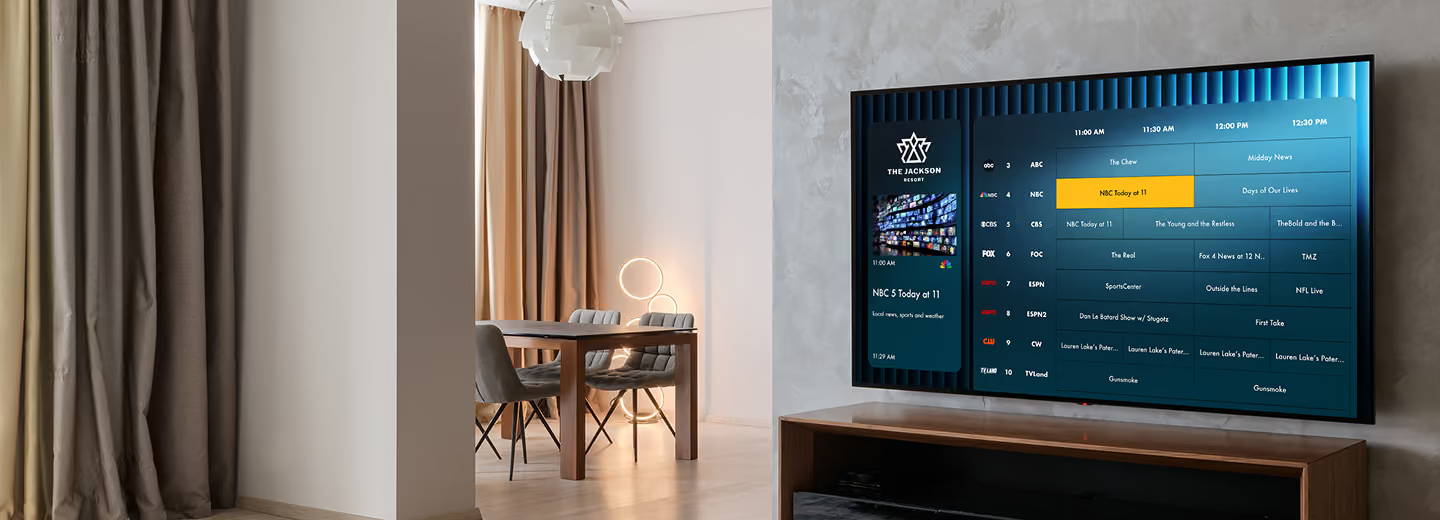
Personalization can transform the guestroom TV from an entertainment device into an extension of the hotel experience.
With connected in-room technology, hotels can welcome guests by name and create an immersive, branded experience that feels tailored from the moment they open the door. The in-room TV can become a dynamic touchpoint that connects guests to the property and puts relevant information, services and experiences within easy reach.
Hotels have the opportunity to use the guestroom screen to highlight what matters most throughout the stay — from restaurant hours and menus to spa specials, resort amenities, daily activities, property information and other timely offers.
This creates value on both sides of the screen. Guests receive a more personalized and convenient way to discover everything the property has to offer, while hotels gain a powerful channel to increase awareness and engagement with on-property amenities and promotions.
When thoughtfully integrated into the guest journey, the guestroom TV can do more than entertain. It can strengthen the connection between the guest and the property, reinforce the hotel’s brand and turn personalized digital engagement into measurable ancillary revenue.
8. Reliable Infrastructure Helps Hotels Prepare for What's Next
Guest expectations will continue to evolve, and properties need infrastructure capable of adapting as consumer technology changes.
Hotels often operate with existing technology systems for years, while the devices and digital services guests use at home evolve much faster.
Building a flexible, connected foundation for hotel technology can help properties respond to new expectations without repeatedly reinventing the guestroom experience.
Ask yourself:
· Does your hotel's technology meet guest expectations today?
· Can it evolve with what guests will expect tomorrow?
· What does it cost the property when the guest experience fails to keep pace?
When Modern Hospitality Becomes Effortless
When connectivity and entertainment work seamlessly, they fade into the background. Guests spend less time figuring out the technology and more time enjoying their stay. Hotel employees spend less time troubleshooting and more time providing meaningful service.
And the technology becomes what it should have been all along: an enabler of exceptional guest experience.
Explore the Research
How are changing guest expectations influencing technology strategies across luxury and upscale hospitality?
Download Enseo's "The Power of Connections II: How Hoteliers Are Leveraging Technology to Elevate the Modern Luxury and Upscale Guest Experience" to explore the research behind today's connected guest experience and the opportunities ahead for hotel leaders.
For years, offering modern technology in guestrooms was a differentiator. Today, simply having that technology is not enough, especially for luxury properties.
Guests arrive at hotels carrying an entire digital ecosystem with them. They move effortlessly between handheld devices, streaming services and connected TVs at home, and increasingly expect the same intuitive experiences when they travel. This shift is particularly important for luxury and upscale hotels, where a disconnected, outdated or unreliable digital experience can quickly undermine an otherwise exceptional stay.
New data reflects just how quickly expectations are changing: 40% of guests requested access to a “smart TV/ability to stream my entertainment” as a “must-have” hotel guestroom feature, up from 21% in 2019.
For hoteliers, the takeaway is clear. In-room entertainment (IRE) is evolving from an amenity into essential guestroom infrastructure. And as expectations rise, the cost of delivering a fragmented or unreliable experience rises with them. That's why we've gathered the top eight reasons a seamless in-room entertainment experience should be a priority for hotels looking to provide exceptional experiences.
1. Guests Expect Hotel Technology to Work Like Their Technology Does at Home
The definition of “modern” hotel technology has changed. A flat-screen or smart TV in the guestroom may check a box on a property technology list, but the presence of the device alone does not create a modern guest experience. Guests increasingly expect to access the content they want, use familiar streaming services and navigate the experience without complicated instructions or assistance.
At home, consumers have become accustomed to unfettered access to entertainment. When the hotel experience introduces extra steps, unfamiliar interfaces or unreliable connections, frustration often follows.
For hotels, achieving home parity standards means thinking beyond the hardware and focusing on the complete guest experience.
2. Streaming Is Becoming a Guestroom Must-Have
Guest behavior has changed dramatically as streaming has become a dominant way people consume entertainment. The rise from 21% of guests identifying smart TV or streaming capabilities as a must-have feature in 2019 to 40% today illustrates more than just a growing interest in a new amenity. It signals a shift in what travelers consider part of a well-equipped guestroom. Guests increasingly expect to continue their personal entertainment habits while traveling rather than adapting those habits to whatever programming happens to be available at the hotel.
Properties that make streaming intuitive, and ensure a strong WiFi network to support it, can help the guestroom feel more familiar, comfortable and personalized.
3. A Premium Room Deserves a Premium Digital Experience
A beautifully designed guestroom can contribute to a premium stay, but when a guest turns on the television and encounters an outdated interface or tries to connect their devices to an unreliable WiFi network, the impact is immeasurable. However, technology does not have to be the centerpiece of a luxury experience. The best technology often disappears into the background because it simply works. For luxury and upscale properties in particular, seamless digital experiences help ensure the technology in the guestroom reinforces the property's brand standards.
4. Technology Friction Can Become Service Friction
When guestroom technology fails, the problem rarely stays isolated to the guestroom. A guest who cannot connect a device, access content or operate the television may call the front desk, contact guest services or otherwise request additional technical assistance. What began as a technology issue becomes a larger service interaction. At scale, those interactions can create unnecessary operational demands for hotel teams.
Reliable, intuitive in-room entertainment can help reduce avoidable troubleshooting and give employees more time to focus on interactions where human connection adds the most value.
Discover reasons four through eight in Part Two.
Explore the Research
How are changing guest expectations influencing technology strategies across luxury and upscale hospitality?
Download Enseo's "The Power of Connections II: How Hoteliers Are Leveraging Technology to Elevate the Modern Luxury and Upscale Guest Experience" to explore the research behind today's connected guest experience and the opportunities ahead for hotel leaders.
Sustainability is a growing concern in the hospitality industry, and technology can play a significant role in reducing a hotel's carbon footprint. From energy-efficient lighting to smart thermostats, hotels can implement various technologies to promote sustainability.
Hotels can utilize solar panels, energy-efficient appliances, and water-saving fixtures to minimize their environmental impact. Additionally, technology can help track and manage resource consumption effectively.
As hotels increasingly rely on technology, cybersecurity has become a critical concern. Protecting guest data from breaches is essential for maintaining trust and compliance with regulations. Hotels must implement robust security measures to safeguard sensitive information.
Hotels should regularly update their software, train staff on security protocols, and utilize encryption to protect data. Additionally, conducting regular security audits can help identify vulnerabilities.
Virtual reality (VR) is emerging as a powerful tool in the hospitality industry, allowing hotels to offer immersive experiences to potential guests. By providing virtual tours of rooms and amenities, hotels can enhance their marketing efforts and attract more bookings.
VR can help guests visualize their stay, making it easier for them to make informed decisions. Additionally, it can be used for training staff, providing them with realistic scenarios to improve service delivery.
Today's hotel guest arrives with a standard expectation of what a modern digital experience should feel like during their stay. Fast WiFi. Instant access to streaming. Familiar interfaces. Personalized information. Technology that works. These expectations aren't being set exclusively by other hotels. They're shaped by the connected experiences guests encounter every day at home and throughout their lives.
But, they create a new competitive benchmark for hospitality.
The question is no longer whether a hotel offers fast, secure WiFi, smart TVs and other digital amenities. Those have become foundational. The more important question is whether those technologies work together to create an experience that feels seamless, reliable, intuitive and relevant to the guest. For hotel management personnel, that makes periodically evaluating the property's complete digital guest experience increasingly important.
Here are six areas to benchmark — and the questions you should ask that can help identify where your property is keeping pace and where there may be opportunities to improve.
Start with the foundation: WiFi. Today's guests don't experience connectivity as an isolated hotel amenity. WiFi supports nearly every part of their digital life on property, whether they're streaming a movie in their room, joining a video call in the lobby, checking email by the pool or using multiple connected devices throughout their stay.
The expectation is increasingly simple: fast, reliable connectivity wherever the guest goes.
Enseo's recent whitepaper, "The Power of Connections II," identifies "reliable, high-speed connectivity" throughout the property as a core expectation among today's upscale and luxury hotel guests. That means a hotel WiFi assessment should go beyond asking whether the network is operational.
Ask:
· Is connectivity reliable in guestrooms and throughout public spaces?
· Are there dead zones or areas with inconsistent performance?
· Can the network maintain performance during peak occupancy?
· Can it accommodate the number of devices today's guests bring?
· Can guests stream, work and video conference without interruption?
· Is connecting to the network intuitive?
· How quickly does the property know when something isn't working?
That last question is particularly important.A network can technically be "up" while individual guests are still experiencing problems. The stronger benchmark is whether the hotel has visibility into performance and can identify and address issues before they become guest complaints.
WiFi is no longer simply an amenity. It is the infrastructure upon which much of the connected hotel experience depends.
Next, walk into a guestroom and turn on the television.
Then, experience it exactly as a guest would. Evaluate:
· Can you immediately understand how to navigate it?
· Can you easily find live programming?
· Can you stream or cast content from a personal device?
· Does the experience feel familiar — or does it require instructions?
This is where the gap between having modern technology and delivering a modern experience becomes particularly visible. According to J.D. Power research, 40% of hotel guests identified access to a "smart TV/ability to stream my entertainment" as a must-have guestroom feature in 2025, up from just 21% in 2019. That's a significant shift in only a few years. Current guest-experience data reinforces the importance of the screen: 73% of guests turn on the TV during their stay, while 81% consider in-room entertainment a key part of the guest experience. For hotels, the benchmark should therefore extend beyond whether there is a modern television hanging on the wall.
Evaluate the entire experience:
· Is streaming and casting simple and reliable?
· Can guests access the content they actually want?
· Does the interface feel intuitive and familiar?
· Is the experience consistent from room to room?
· Does the technology protect guest privacy?
· What happens when something goes wrong?
For today's traveler, the standard is increasingly at-home parity: technology that behaves as intuitively at the hotel as it does in their own living room. And for upscale and luxury properties, meeting that expectation is increasingly part of delivering on the hotel's brand promise.
The guestroom TV can do more than entertain. It is also one of the largest digital screens a hotel has available to engage a guest — and one that is already located at the center of the guestroom.
That creates an opportunity to evaluate the TV as part of the broader property experience:
· Does the screen reflect your brand?
· Can it welcome and recognize the guest?
· Can travelers easily discover what is happening elsewhere on property?
· Can you send scheduled, targeted messages to guests?
· Can you highlight your hotel’s story or nearby attractions that will make the guest’s stay more memorable?
Restaurants and menus. Spa services and specials. Resort amenities. Daily activities. Events. Property information. Relevant promotions.
Instead of expecting guests to search for this information themselves, a connected digital experience can bring it directly to them. Your property can turn in-room TVs and public-facing screens into personalized communication hubs.
This creates both an experience opportunity and a business opportunity.
Relevant, well-timed messaging can make it easier for guests to discover what the hotel has to offer while increasing awareness of revenue-generating amenities and experiences for the property.
In fact, hospitality leaders participating in Enseo's industry roundtables identified new in-room revenue opportunities alongside stronger satisfaction, loyalty, brand differentiation and reduced operational friction as potential outcomes of modernized guest-experience technology.
The benchmark isn't simply, "Can we put a message on the TV?"
It's: "Are we using our digital touchpoints to make the guest's experience more relevant while helping them discover more of our property?"
Guests don't stop interacting with a hotel when they leave their room.
They move through lobbies, restaurants, bars, fitness centers, meeting spaces, pool areas and other shared environments. And at resorts and large properties like casinos, that digital footprint can extend even further.
The property's technology strategy should account for that complete environment.
Evaluate whether guests experience the same standard of connectivity and digital quality throughout the property:
· Can they move from their guestroom to a larger public space without losing reliable connectivity?
· Do TVs in restaurants, bars and common areas deliver content reliably?
· Can different areas of the property support different viewing needs?
· Does the digital experience reinforce the hotel's brand wherever guests encounter it?
This is especially important because every property is vastly different.
A downtown convention hotel, a sprawling beachside resort, a boutique property with event space and a luxury urban hotel may have dramatically different connectivity, entertainment and communication requirements. Guests pay for consistency and technology needs to support each property's individual identity and operating environment.
The goal isn't to create the same experience everywhere.
It's to create a consistently reliable experience designed for your property.
Some of the most important pieces of the digital guest experience guests should never notice.
Monitoring is one of them.
Guests don't know which server, access point, network component or platform is responsible for delivering their digital experience. But they do know when something isn't working.
In luxury hospitality especially, technology failures become noticeable precisely because guests are accustomed to technology working reliably.
This is one of the many hidden challenges of disconnected hotel systems: integrations involving technologies such as WiFi and in-room entertainment can become highly visible to guests at the slightest disruption.
That makes proactive monitoring and operational visibility important benchmarks for the guest experience itself.
Ask:
· Can hotel teams see the health of critical guest-facing technology in real time?
· Are problems discovered proactively or only after a guest calls?
· Can issues be diagnosed remotely?
· How much employee time is spent troubleshooting?
· Are recurring failures visible at the property or portfolio level?
· Does support operate on the same 24/7 schedule as hospitality?
The goal is to shift from reactive technology management to proactive experience management. When systems are proactively monitored and centrally managed, hotel teams save time, operational interruptions decline, guest satisfaction improves and staff can focus more fully on service delivery. That's why property monitoring technology isn't simply an IT function. It's a way to protect the guest experience before there's an experience to recover.
A hotel may have excellent WiFi, modern televisions, digital communications and other individual technologies. But individual systems don't automatically create a connected experience. Disconnected systems often create a significant operational bottleneck. Guest data and technology can live across different vendors and platforms, leaving hotel employees to manually bridge gaps when those systems can't easily communicate.
That gives hotel leaders an important benchmark: wow much human effort does it take to make your technology work together?
Look for signs of fragmentation:
· Employees repeatedly troubleshooting guest technology
· Multiple vendors involved in resolving a single issue
· Limited visibility across systems
· Information trapped within individual platforms
· Manual workarounds becoming part of normal operations
· Different guest-facing technologies delivering inconsistent experiences
· Hotel teams learning about failures from guests rather than from their systems
This matters even more as hotels continue to face labor and training pressures. AHLA research found that nearly two-thirds of surveyed hotels continued to experience staffing shortages, while guest expectations continued to rise. Connecting systems can therefore create value beyond technology efficiency. It can give employees back something far more valuable: time to focus on the guest.
A full digital guest experience evaluation doesn't need to begin with a technology purchase.
It should begin with the experience your property wants to deliver.
· Walk the property as a guest.
· Connect to the WiFi.
· Stream content.
· Cast to the television.
· Explore the guestroom interface.
· Move into public spaces.
· Look at the screens guests encounter.
· Test the technology during high-demand periods.
Then walk the same experience as an operator.
· How quickly can you identify an issue?
· How many systems do employees have to manage?
· Where are staff members troubleshooting instead of serving guests?
· Which technologies operate independently when they would be more valuable connected?
Which questions should you prioritize?
· Are systems integrated or fragmented?
· Where are staff spending unnecessary time troubleshooting?
· Are guests encountering in-room interruptions?
· Do teams have enough visibility to respond quickly?
· And are technology decisions supporting both revenue growth and operational optimization?
From there, properties can begin prioritizing improvements around three outcomes:
1. Seamless guest experiences.
Technology feels familiar, fast and intuitive.
2. Predictive, proactive operations.
Hotel teams can see what is happening and address issues before they affect guests.
3. Stronger business results.
Technology supports satisfaction, loyalty, operational efficiency and new opportunities to generate revenue.
Hotels don't necessarily need more technology. They need technology that works better together. The competitive advantage isn't simply having WiFi, smart TVs, streaming, digital messaging or monitoring tools. The opportunity lies in connecting guests to an experience that feels effortless. Ultimately, the most successful hotel technology may be the technology guests think about the least.
Ready to Benchmark Your Guest Experience?
Enseo's "The Power of Connections II: Leveraging Innovation to Elevate the Modern Luxury and Upscale Guest Experience" explores how evolving guest expectations, disconnected systems, personalization and proactive operations are reshaping the modern hotel experience.
Download the whitepaper to explore the research, industry perspectives and practical questions hotel owners and operators can use to evaluate their technology strategies and prepare for what's next.
Mobile apps are becoming a vital tool for hotels to engage with guests before, during, and after their stay. These apps can provide guests with information about hotel amenities, local attractions, and special offers. By facilitating communication, hotels can enhance the overall guest experience.
Successful hotel apps often include features like mobile check-in, room service ordering, and loyalty program management. These functionalities not only improve convenience but also foster guest loyalty.
Data analytics is revolutionizing the hospitality industry by providing insights into guest preferences and behaviors. Hotels can analyze booking patterns, customer feedback, and market trends to tailor their services and marketing strategies. This data-driven approach helps in making informed decisions that enhance guest satisfaction and drive revenue.
Hotels can utilize various analytics tools to gather and interpret data. These tools can help identify trends, forecast demand, and optimize pricing strategies.
Automation tools are becoming essential for hotels looking to improve efficiency. From automated housekeeping schedules to AI-driven customer service chatbots, these tools help streamline operations and reduce labor costs. By automating routine tasks, staff can focus on providing exceptional guest experiences.
Hotels can implement chatbots to handle common inquiries, freeing up front desk staff for more complex issues. Additionally, automated inventory management systems can help track supplies and reduce waste.
Contactless check-in has become a necessity in the post-pandemic world. Hotels are adopting technology that allows guests to check in via their smartphones, minimizing physical contact. This not only enhances safety but also speeds up the check-in process, allowing guests to head straight to their rooms.
To implement contactless check-in, hotels can utilize QR codes and mobile apps. Guests can receive a unique code that grants them access to their rooms, ensuring a seamless experience.
Cloud-based hotel management systems are transforming how hotels operate. These systems allow for real-time data access, enabling staff to make informed decisions quickly. With features like automated booking management and integrated payment processing, hotels can reduce manual errors and enhance guest service.
Cloud solutions offer scalability, allowing hotels to adapt to changing demands without significant upfront investments. Additionally, they provide robust data security, ensuring that sensitive guest information is protected.
In today's competitive hospitality industry, technology plays a crucial role in enhancing guest experiences. From mobile check-ins to smart room controls, hotels are leveraging innovations to streamline operations and improve customer satisfaction. For instance, mobile apps allow guests to control room settings, order room service, and even communicate with staff directly.
Smart rooms equipped with IoT devices enable guests to personalize their environment. They can adjust lighting, temperature, and entertainment options through their smartphones. This level of customization not only enhances comfort but also fosters a sense of luxury.